Bai Xi
Broadcaster| chuán | tǒng |
| 传 | 统 | adj. traditional; n. tradition |
| Wǒ | de | mā | ma | shì | yí | ge | chuán | tǒng | de | nǚ | rén. |
| E.g. | 我 | 的 | 妈 | 妈 | 是 | 一 | 个 | 传 | 统 | 的 | 女 | 人。 | My mother is a traditional woman. |
| chūn | jié |
| 春 | 节 | n. Spring festival |
| duān | wǔ | jié |
| 端 | 午 | 节 | n. Dragon Boat Festival |
| zhōng | qiū | jié |
| 中 | 秋 | 节 | n. Mid-Autumn Festival |
| bèi | chēng | wéi |
| 被 | 称 | 为 | v. to be known as |
| Dà | xióng | māo | bèi | chēng | wéi | zhōng | guó | de | guó | bǎo. |
| E.g. | 大 | 熊 | 猫 | 被 | 称 | 为 | 中 | 国 | 的 | 国 | 宝。 | The giant panda is known as the Chinese national treasure. |
| Zhè | ge | huì | yì | fēi | cháng | zhòng | yào. |
| E.g. | 这 | 个 | 会 | 议 | 非 | 常 | 重 | 要。 | This meeting is very important. |
| shǒu | suì |
| 守 | 岁 | v. to stay up late or all night on New Year's Eve |
| Tā | zhè | yàng | shuō | yì | wèi | zhe | shén | me? |
| E.g. | 他 | 这 | 样 | 说 | 意 | 味 | 着 | 什 | 么? | What does he mean by saying like this? |
| jié | shù |
| 结 | 束 | n. the end; v. to finish |
| Zhè | ge | diàn | yǐng | jié | shù | le. |
| E.g. | 这 | 个 | 电 | 影 | 结 | 束 | 了。 | The movie ended. |
| kāi | shǐ |
| 开 | 始 | n. the beginning; n. to begin |
| Xīn | de | yì | tiān | kāi | shǐ | le! |
| E.g. | 新 | 的 | 一 | 天 | 开 | 始 | 了! | A new day begun! |
| chūn | jié | wǎn | huì |
| 春 | 节 | 晚 | 会 | n. Spring Festival Gala |
| tiē | chūn | lián |
| 贴 | 春 | 联 | to paste spring couplets |
| guà | cǎi | dēng |
| 挂 | 彩 | 灯 | to hang colored lights |
| fàng | biān | pào |
| 放 | 鞭 | 炮 | to set off firecracker |
| qìng | zhù | jié | rì |
| E.g. | 庆 | 祝 | 节 | 日 | to celebrate the festival |
| hóng | bāo |
| 红 | 包 | n. gift money wrapped in red envelope |
| hǎo | hǎo | xué | xí |
| E.g. | 好 | 好 | 学 | 习 | to study well |
| hǎo | hǎo | chī | fàn |
| 好 | 好 | 吃 | 饭 | to eat well |
| xiǎng | shòu | shēng | huó |
| E.g. | 享 | 受 | 生 | 活 | to enjoy the life |
| jià | qī |
| 假 | 期 | n. holiday, vacation |
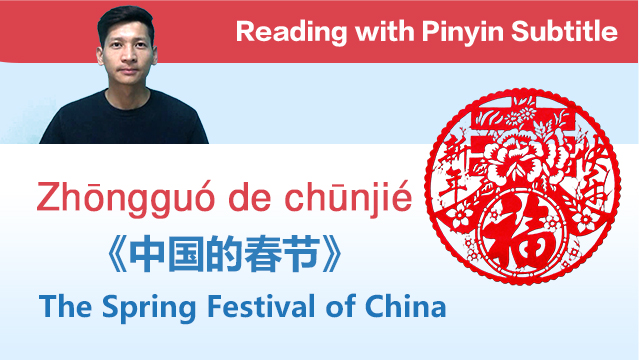
| Zhōngguó de chūnjié |
| 《中国的春节》 | The Spring Festival of China |
| Zhōngguó yǒu hěnduō chuántǒng de jiérì, |
| 中国有很多传统的节日, | There are many traditional festivals in China, |
| wǒ zuì xǐhuān de jiérì shì chūnjié. |
| 我最喜欢的节日是春节。 | my favorite festival is the Spring festival. |
| Chūnjié hé duānwǔjié, zhōngqiūjié |
| 春节和端午节、中秋节 | The Spring Festival and the Dragon Boat Festival and the Mid-Autumn Festival |
| yìqǐ bèi chēngwéi zhōngguó zuì zhòngyào de sānge jiérì. |
| 一起被称为中国最重要的三个节日。 | are together known as the three most important festivals in China. |
| Chūnjié de shíhou, |
| 春节的时候, | In the Spring Festival, |
| rénmen dōu huì huíjiā, |
| 人们都会回家, | people will all go home. |
| rénmen huì zài chúxī shǒusuì. |
| 人们会在除夕守岁。 | They will stay up late on New Year's Eve. |
| Chúxī shì chūnjié de qián yíge wǎnshang, |
| 除夕是春节的前一个晚上, | New Year's Eve is the night before the Spring Festival, |
| yìwèi zhe yìnián de jiéshù. |
| 意味着一年的结束。 | it means the end of the year. |
| Chūnjié jiù shì xīn de yìnián de kāishǐ. |
| 春节就是新的一年的开始。 | The Spring Festival is the beginning of the New Year. |
| Zài chūnjié, |
| 在春节, | In the Spring festival, |
| rénmen huì hé jiārén yìqǐ kàn chūnjié wǎnhuì. |
| 人们会和家人一起看春节晚会。 | people will watch the Spring Festival Gala with their families. |
| Rénmen huì tiē chūnlián, guà cǎidēng. |
| 人们会贴春联、挂彩灯。 | People will paste spring couplets and hang colored lights. |
| Zài chūnjié, |
| 在春节, | In the Spring Festival, |
| běifāng rén huì chī jiǎozi, |
| 北方人会吃饺子, | the northern people will eat dumplings, |
| dànshì zài nánfāng, |
| 但是在南方, | but in the South, |
| rénmen huì chī niángāo. |
| 人们会吃年糕。 | people will eat rice cake. |
| Chūnjié de shíhou, |
| 春节的时候, | In the Spring Festival, |
| rénmen huì fàng biānpào hé yānhuā lái qìngzhù jiérì. |
| 人们会放鞭炮和烟花来庆祝节日。 | people will set off firecrackers and fireworks to celebrate the festival. |
| Lǎorén gěi xiǎoháizi hóngbāo yě shì yíge chuántǒng. |
| 老人给小孩子红包也是一个传统。 | That the elderly people give children the gift money is also a tradition. |
| Zài chūnjié, |
| 在春节, | In the Spring Festival, |
| wǒ hé jiārén kěyǐ hǎohǎo xiǎngshòu jiàqī de huānlè. |
| 我和家人可以好好享受假期的欢乐。 | I can fully enjoy the happiness of holiday with family. |
| Nǐ zuì xǐhuān de jiérì shì shénme ne? |
| 你最喜欢的节日是什么呢? | What's your favorite festival? |
« #10 At the Dry Cleaner – 在干洗店| Chinese Reading
#12 Edward’s One Day in China – 爱德华在中国的一天| Chinese Reading >> »